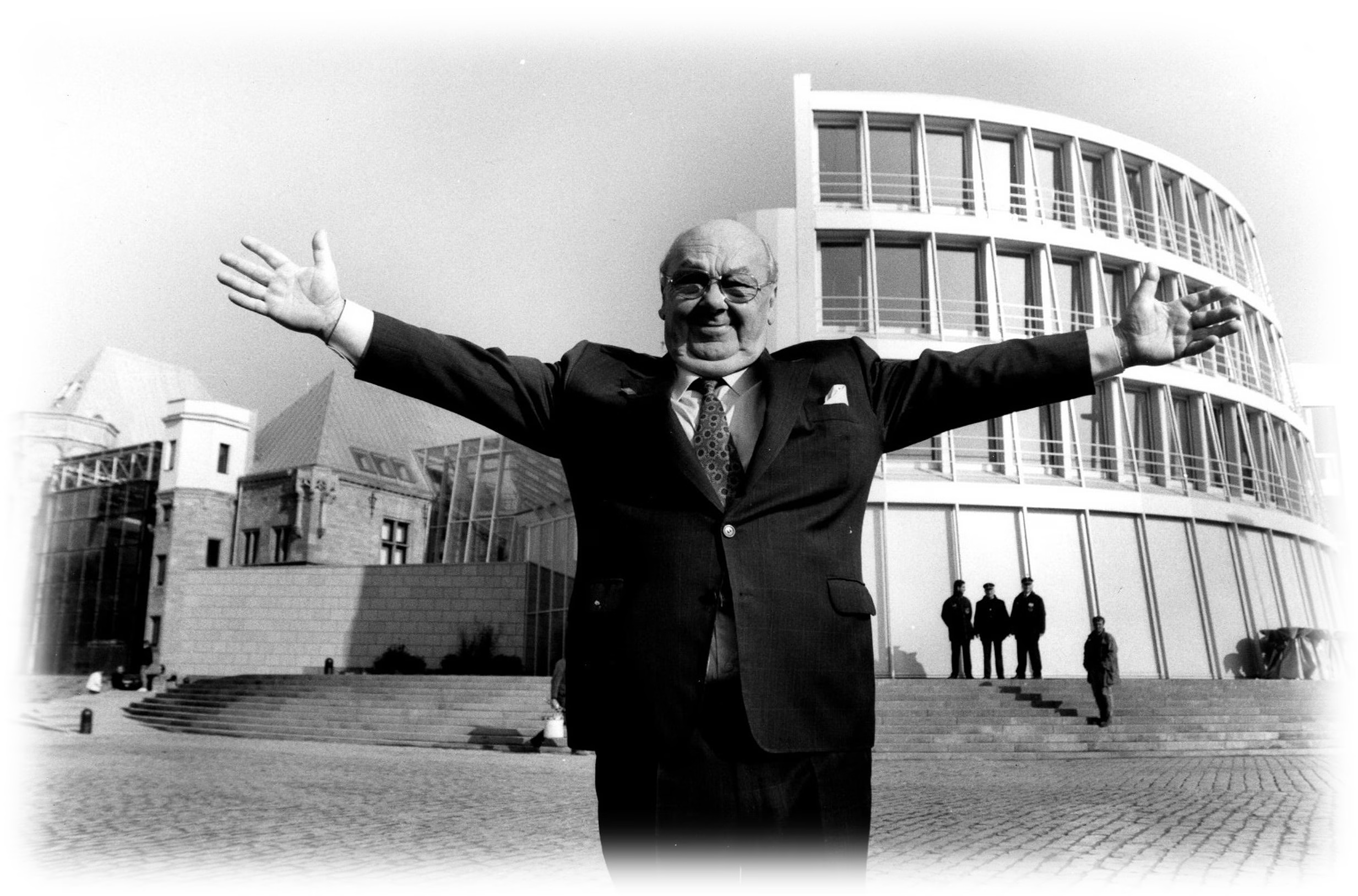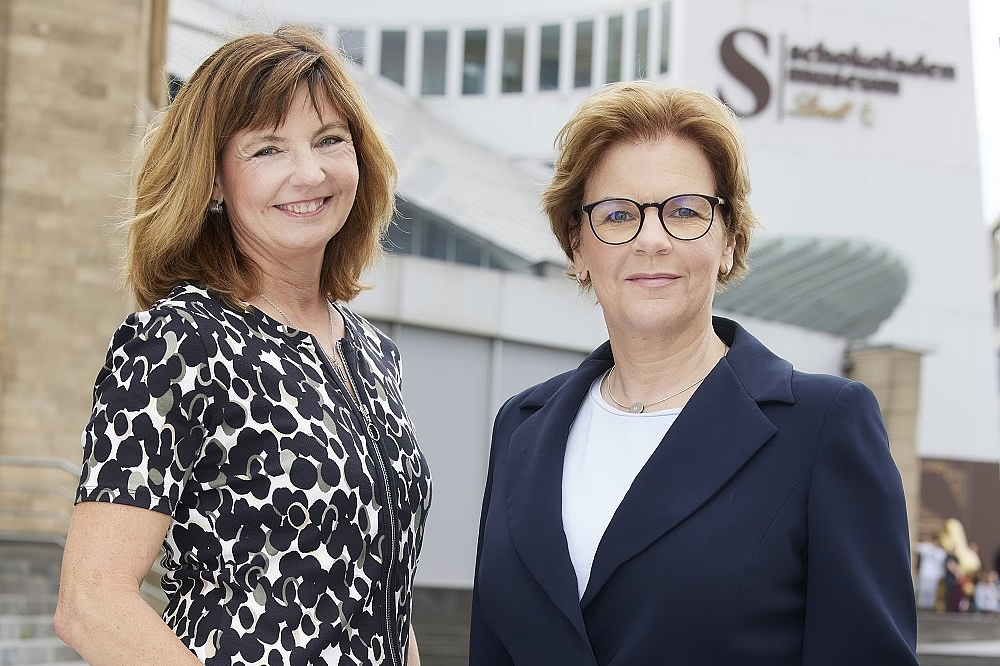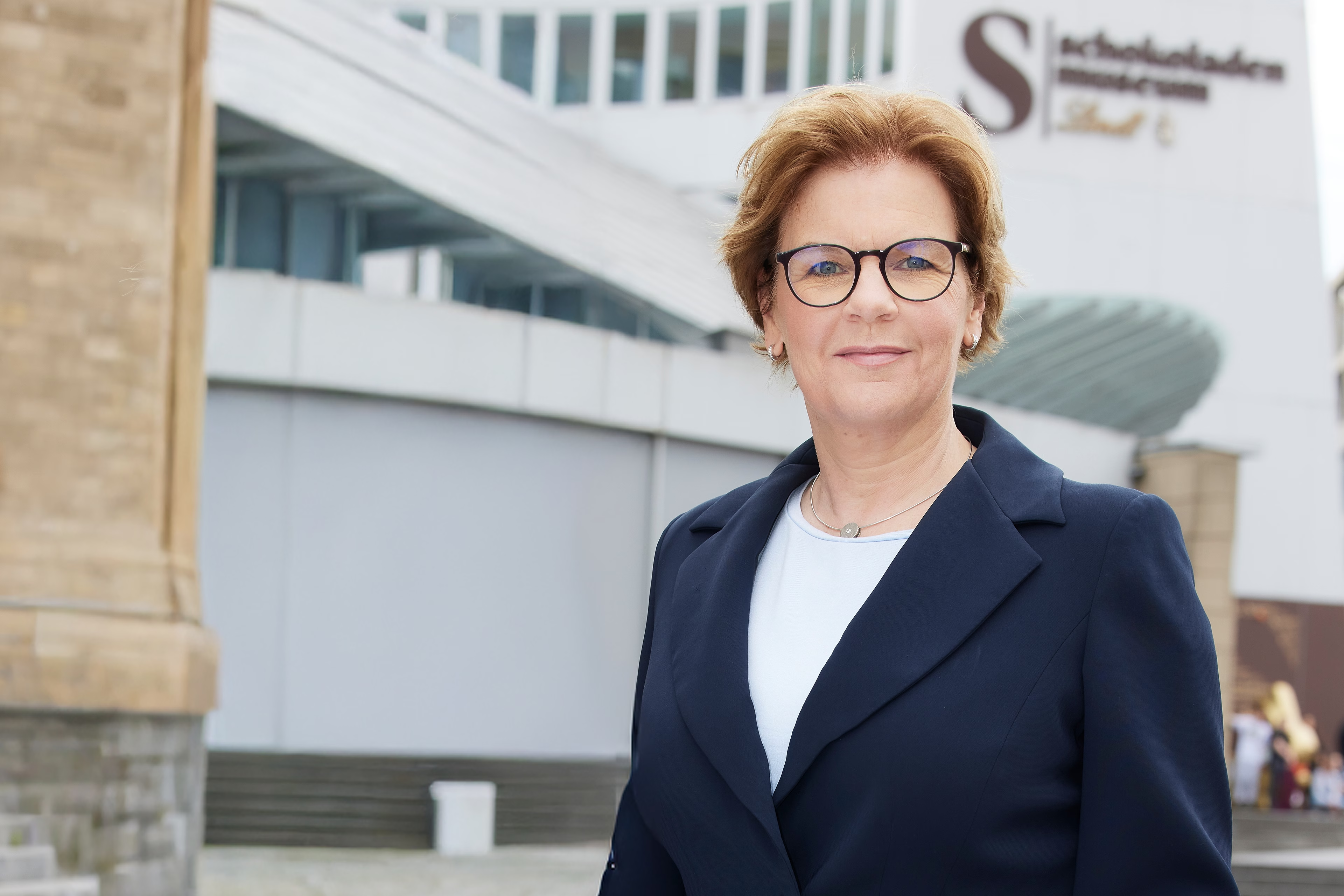
Interview with Annette Imhoff in the Kölner Stadtanzeiger
The Kölner Stadt-Anzeiger recently dedicated a wonderful portrait to Annette Imhoff, highlighting what it means to run one of Germany's most visited museums with such passion and vision.

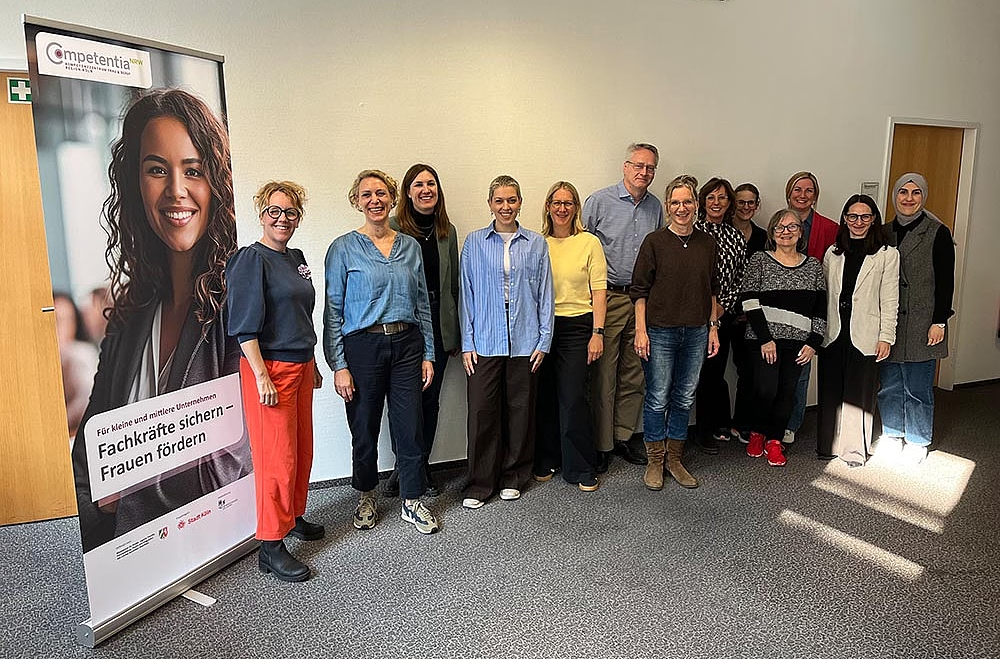
Our museum curator, Andrea Durry, takes us on a very special journey behind the scenes of the Chocolate Museum—but this time, it’s not about the exhibits, but about social responsibility. Together with her colleague Yvonne Arens, she is involved in the MENTEGRA mentoring program to help a qualified female refugee from Ukraine ease into the German workforce. In this post, you’ll learn why this exchange is an absolute win-win for both sides and how the first meeting went over coffee and lots of questions.
As the Chocolate Museum, we see ourselves not only as a place for culture and history, but also as part of the society in which we live and work. For us, responsibility does not end at the museum door. In fact, that’s where it really begins.
For this reason, we participate in the MENTEGRA mentoring program—and have made a conscious decision to support a qualified refugee woman on her path into the German workforce.
MENTEGRA is a program of the Cologne Region Competence Center for Women & Work. It brings together small and medium-sized enterprises with refugee women who often have solid training and valuable professional experience from their home countries. Nevertheless, many of them find it difficult to secure suitable employment in Germany.
This is exactly where the program comes in: Over a period of twelve months, mentoring pairs are formed consisting of a mentor and a mentee. Regular meetings focus on career guidance, insights into daily work life, and the exchange of knowledge and experiences.
Accompanying networking events are held, and a work shadowing placement at a company allows participants to gain practical experience and build professional contacts.
For us as a museum, participating in MENTEGRA is above all an expression of social responsibility. We want to support women in refugee situations and help where we can—with our knowledge, our experience, and our networks.
At the same time, the program gives us the opportunity to meet qualified professionals who have often been far too invisible until now. So it’s not just about support, but also about exchange and mutual learning.
Together with a colleague, I am mentoring a woman who is highly qualified in the field of food technology. Even our first meetings were marked by openness and trust. It quickly became clear how much motivation and expertise she brings to the table—and at the same time, what challenges she faces.
I was surprised by how difficult it can be to gain a foothold in the German job market despite having a good education and professional experience. I was also particularly moved by her personal story, which is marked by profound experiences since she fled her home country. In the mentoring process, this reality becomes very tangible. It highlights just how complex the structures and requirements can be, how different work styles and career paths are, how varied daily work life is in her home country compared to Germany—and how crucial personal support and guidance are in this process.
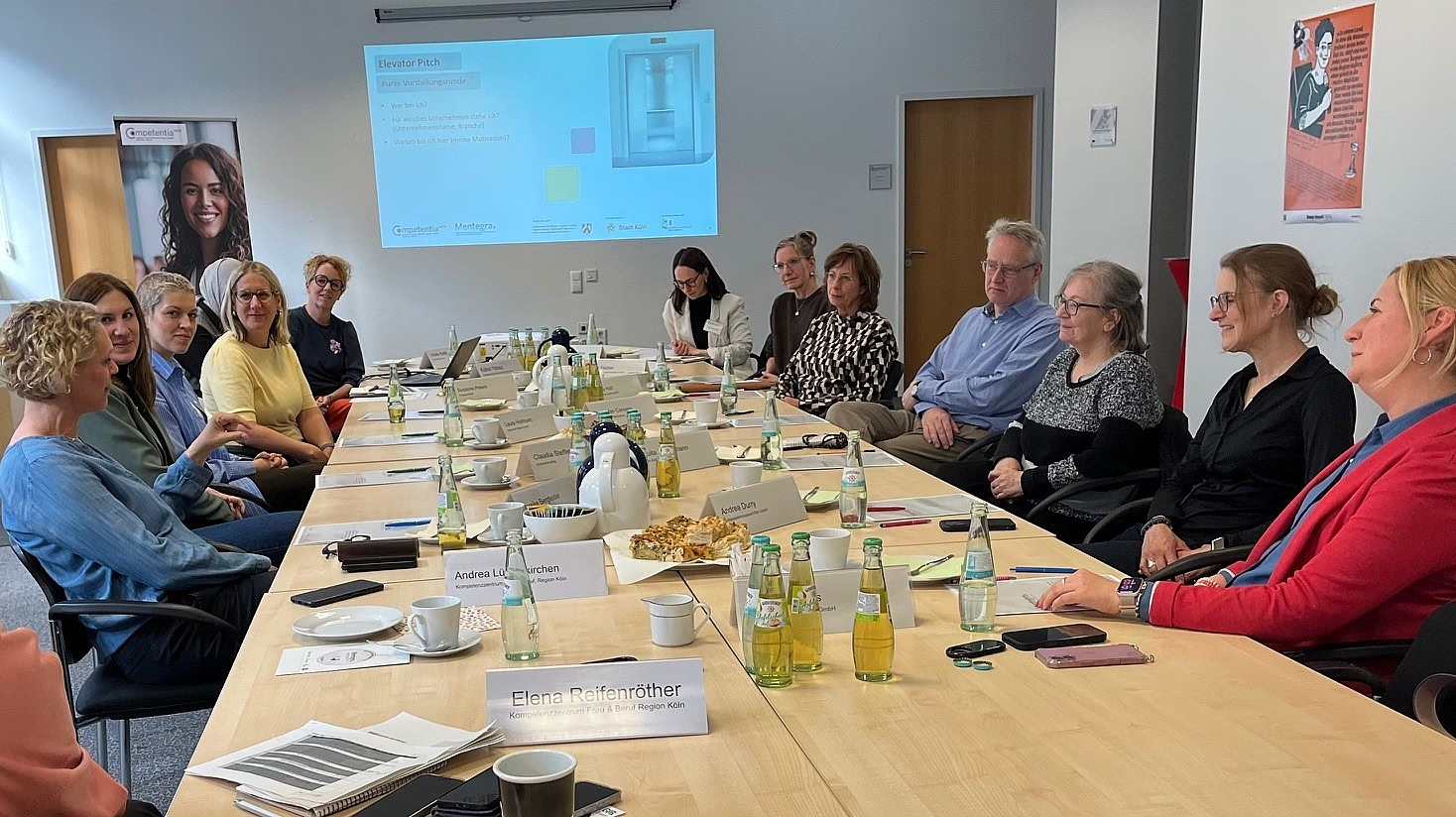
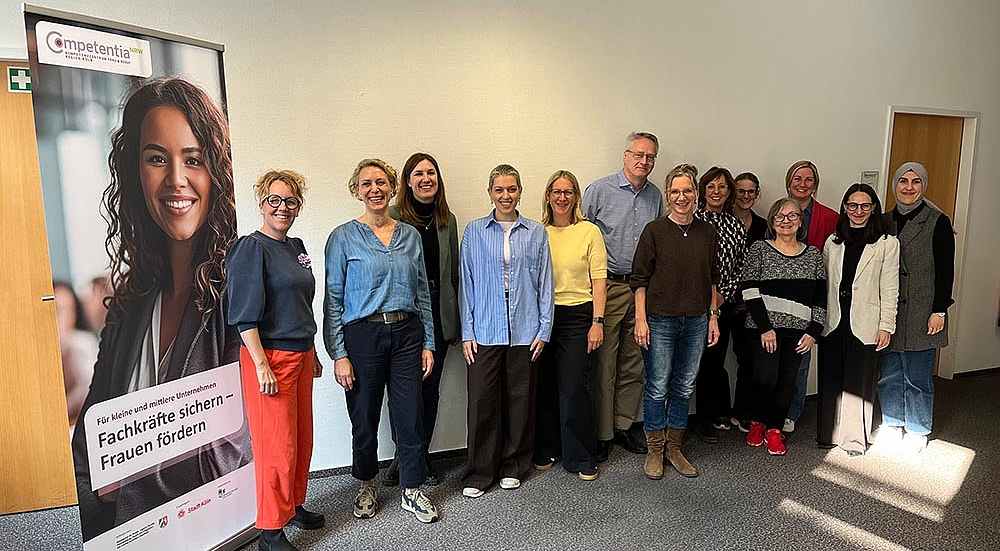
A central aspect of the program is the mentee’s own commitment. The path to the job market requires a great deal of initiative, perseverance, and a willingness to adapt to new circumstances. This is certainly not always easy and is a far cry from how our mentee used to live.
In the coming weeks, our mentee will begin a work shadowing placement at the Chocolate Museum. This marks the start of a new phase in the mentoring process: gaining insight into daily work life, learning about processes, and building further connections.
We very much hope that this path will open new doors—both professionally and personally. At the same time, we also see the internship as an opportunity for us to learn from one another and gain new perspectives.
Programs like MENTEGRA highlight how important personal encounters, networks, and mutual support are for integration and equal opportunity. For us as a museum, participation is therefore far more than a single commitment. It is an exchange that enriches both sides.
We hope that our insights will encourage other companies to get involved in MENTEGRA. The program impressively demonstrates the immense potential of personal encounters—and how important it is to actively foster them.
Anyone interested in becoming part of this mentoring network can find more information about the program, the process, and the terms of participation on the website of the Cologne Region Women & Work Competence Center:
MENTEGRA – Mentoring for the Professional Integration of Refugee Women
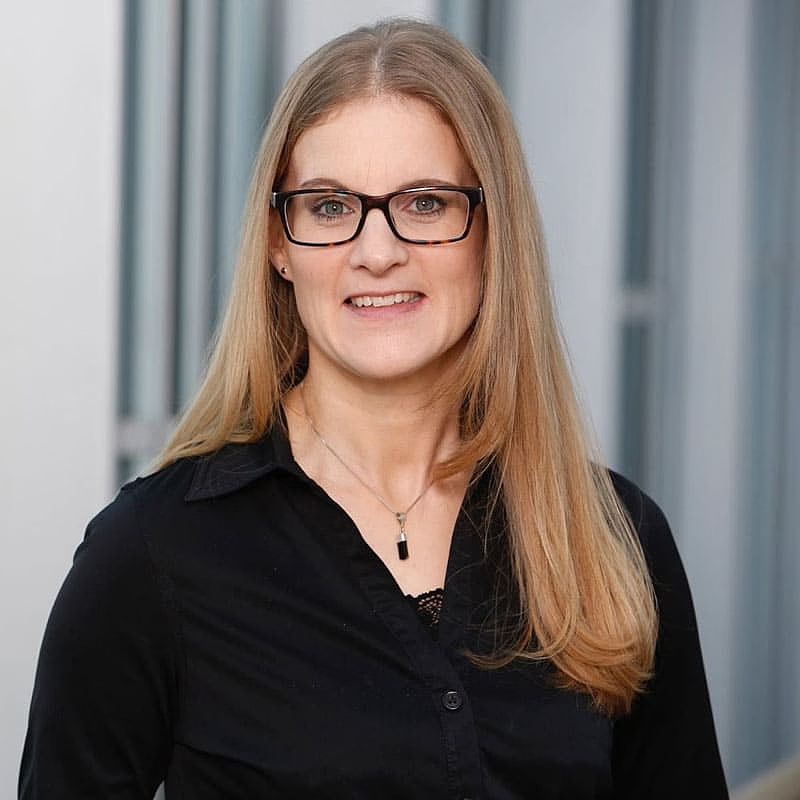
My name is Andrea and I'm originally from the Eifel region. At the Chocolate Museum I am responsible for the exhibition, the collection and the archive. I've been working at the Chocolate Museum for almost thirty years now and I still eat chocolate every day. I love it with a cup of coffee. My favorite place in the Chocolate Museum is our cultural history department. I am always amazed at what the historical exhibits can tell us.