
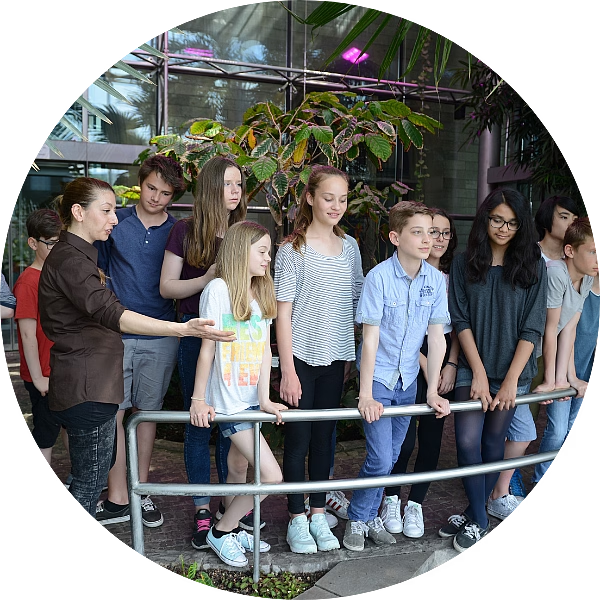
School trip to the Chocolate Museum
The Chocolate Museum is a certified extracurricular learning centre and offers specialised museum education programmes for all school years. Whether it’s a fun discovery tour for primary school pupils or a critical examination of global supply chains for secondary school pupils – our guided tours are directly linked to the curriculum and the principles of Education for Sustainable Development (ESD).
Learn - Experience - Discover
The Chocolate Museum is a versatile and interactive place of learning and experience, UNESCO-certified as an extracurricular place of learning. From the cultivation of cocoa and the production of chocolate to 5,000 years of cultural history, fair trade and sustainability, we provide comprehensive information and education. A visit to the Chocolate Museum is a useful addition to school lessons and motivates independent learning. Here, not only the intellect is addressed, but also all the human senses: visual, auditory, tactile, even olfactory and gustatory experiences are possible.
Find out more about our guided tours for your school class!
Our guided tours
The Chocolate Museum invites school classes on an exciting and educational journey into the world of cocoa and chocolate. The interactive guided tours and hands-on activities are aimed at all school levels and types. As a special offer for school classes, we offer additional guided tours before the museum opens at 9.30 am. We will be happy to advise you.
Our educational concept
The Chocolate Museum offers unique learning opportunities thanks to its spatial conditions. The environment is lively, multi-sensory and emotional. Interdisciplinary, exploratory and action-oriented learning is possible. For children and young people, a visit to the Chocolate Museum means learning without effort, with fun and without external pressure.
Education for sustainable development: The topic of sustainable development is an integral part of the museum's mission statement. In our exhibition, visitors are informed about the problematic working and living conditions of people in the cocoa-growing countries as well as the ecological challenges of cocoa cultivation. Using current examples, we show how companies and organizations are working to improve the difficult situation.
Does the Chocolate Museum offer free educational materials to help with preparation?
Yes, the Chocolate Museum provides teachers with free worksheets and teaching materials to help them prepare for and follow up on the field trip. These cover topics such as the history of chocolate, the cocoa trade, and sustainability:
Learning Materials, ESD
Materials for Preparation and Follow-Up
Is the Chocolate Museum an official educational site?
The Chocolate Museum is a multi-award-winning extracurricular learning center. Our educational programs are based on the guidelines for Education for Sustainable Development (ESD) and support global learning as part of the school curriculum.
Are there professional development programs for teachers?
We regularly host free informational sessions and professional development workshops for teachers. Here, you can meet the museum staff, learn about our current educational programs, and plan the best possible museum visit for your class.
Learn more
Can we visit the museum as a school class even without a booked guided tour?
Yes, unaccompanied visits are possible. However, for the best learning experience, we recommend our museum education programs. Group tickets for school classes can be booked through our online store. Book group tickets for the students and add teacher tickets using individual tickets (1 free teacher ticket for every 10 students).
Our visitor services team will be happy to assist you with the booking. Please contact us by email.
Which tours are suitable for which age groups?
From the cacao tree to a bar of chocolate: Middle and high school students—this guided tour is part of our “Education for Sustainable Development” program.
Unraveling the Mystery of Chocolate: Tailored to all age groups!
Sustainable and Fair: Chocolate and Cocoa—for middle and high school students