MENTEGRA – The Mentoring Programme
How the Cologne Chocolate Museum supports refugee women as they enter the workforce. A look behind the scenes at the MENTEGRA mentoring programme.


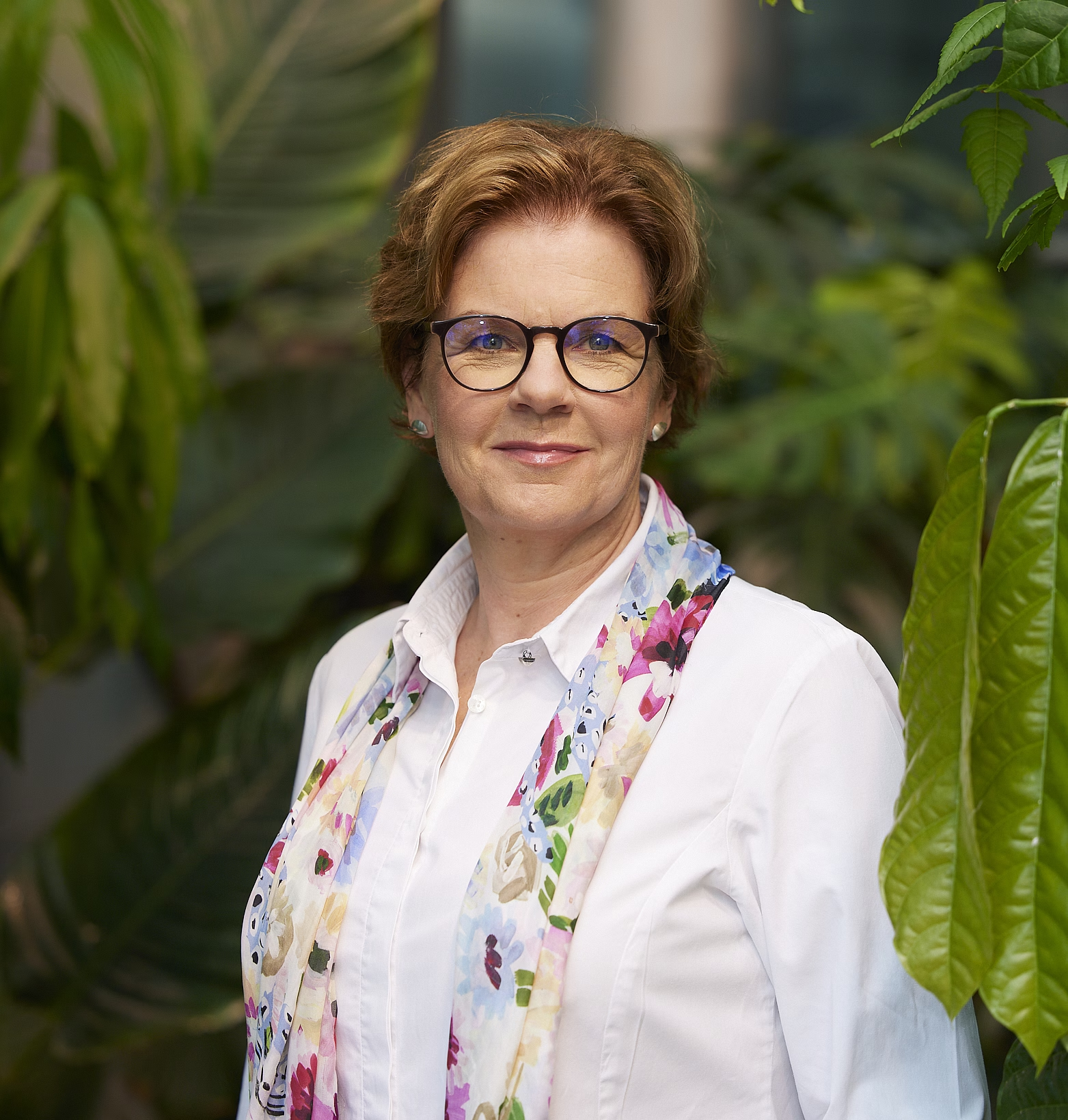
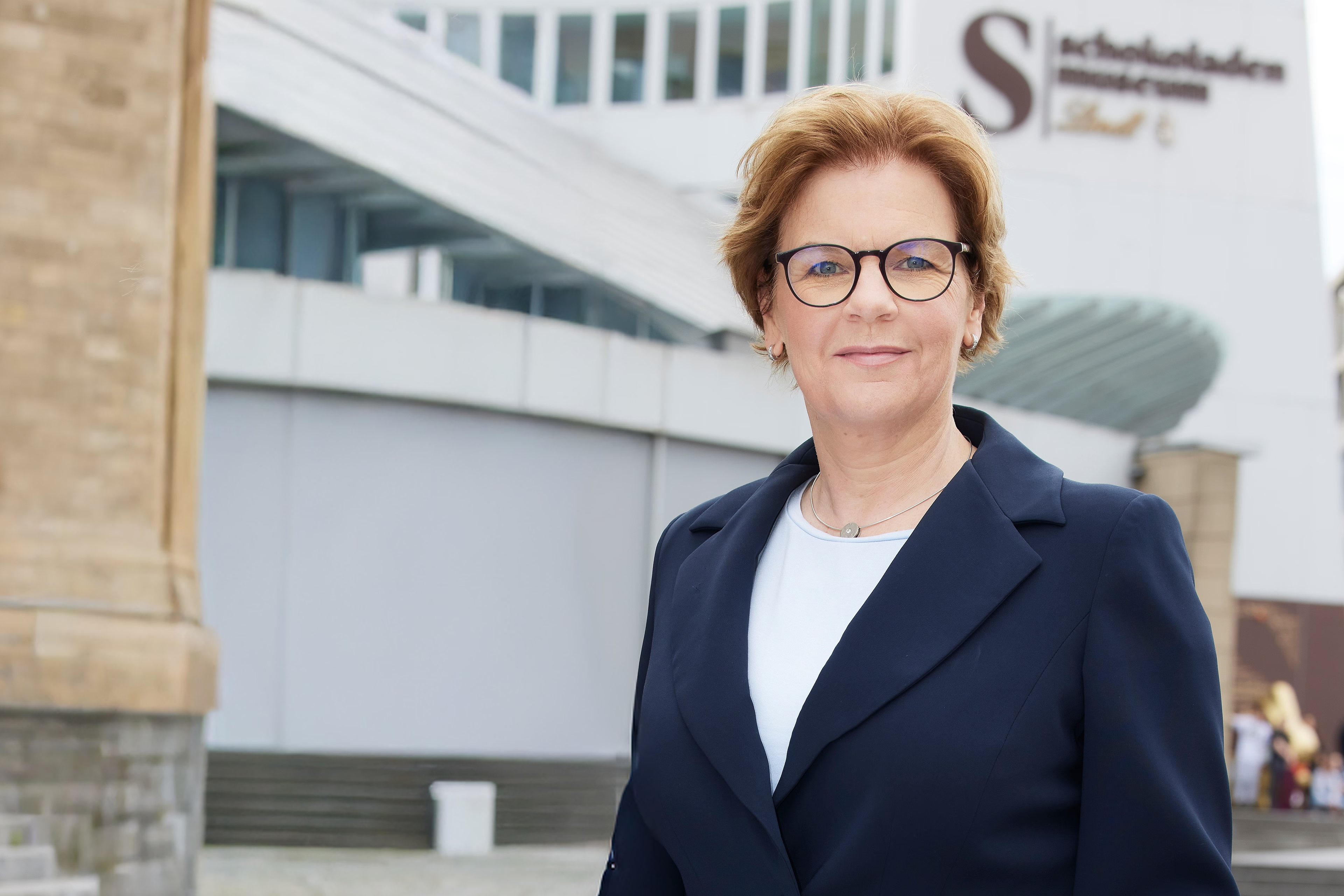
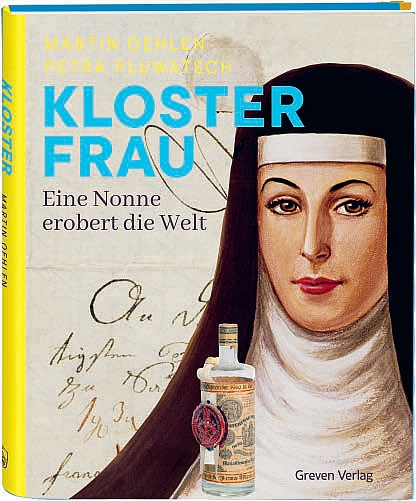
Annette Imhoff is an entrepreneur and the executive director of the Cologne Chocolate Museum. In the book *Klosterfrau—A Nun Conquers the World*, she discovers in Maria Clementine Martin (1775–1843) a surprisingly modern Cologne entrepreneur.
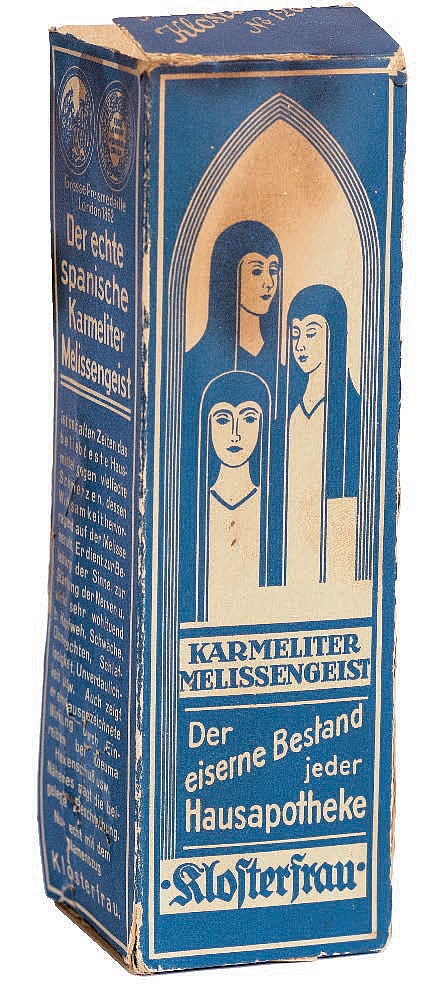
Like most people, I’ve known about Klosterfrau since my childhood. Back then, lemon balm liqueur was a staple in nearly every household, including ours. But as familiar as I was with the brand and the three nuns on the label, I knew next to nothing about the woman behind it—an entrepreneur whom I would have loved to look up to as a student. That’s why I was delighted to read the book *Klosterfrau—A Nun Conquers the World* by Petra Pluwatsch and Martin Oehlen. To be honest, I had initially expected a lavish anniversary volume filled with beautiful pictures. What I got was so much more: the portrait of a woman who, after losing her convent and her previous livelihood, did not give up but reinvented herself once again.
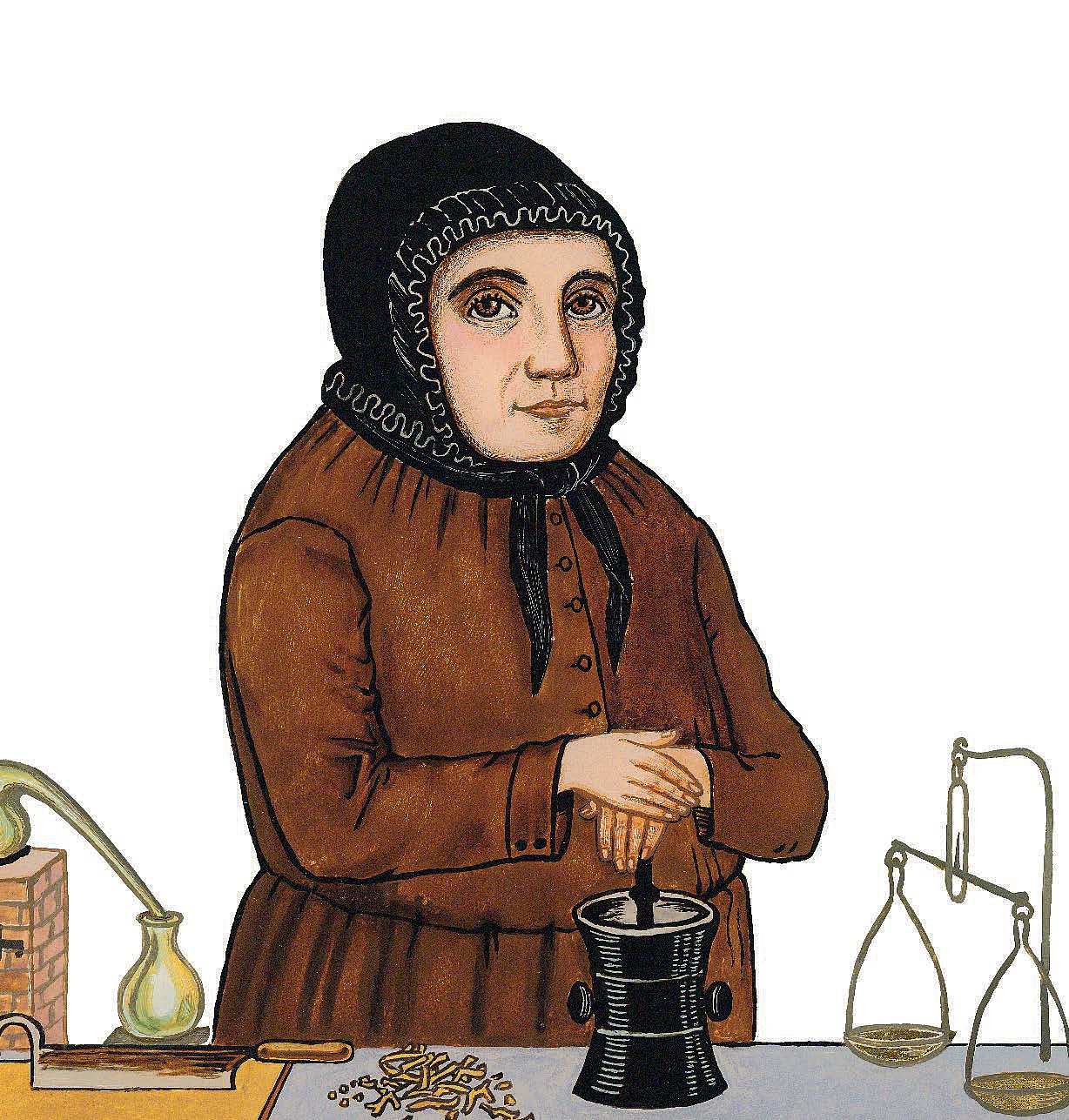
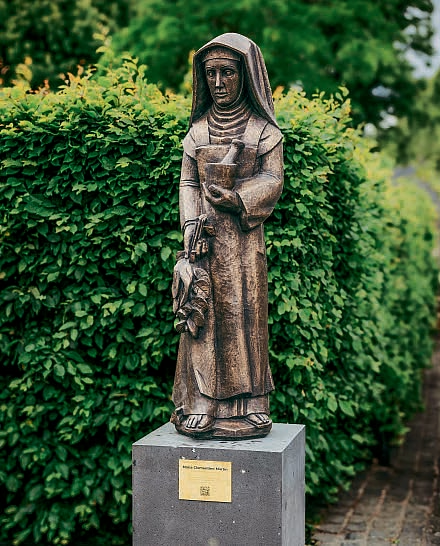
Maria Clementine Martin was a nun, nurse, and healer. After secularization, she found herself without the protection of her community. She cared for the wounded on the battlefield of Waterloo, received a small pension from the Prussian king in return, and founded her business at the foot of Cologne Cathedral—at a time when women were rarely granted economic independence.
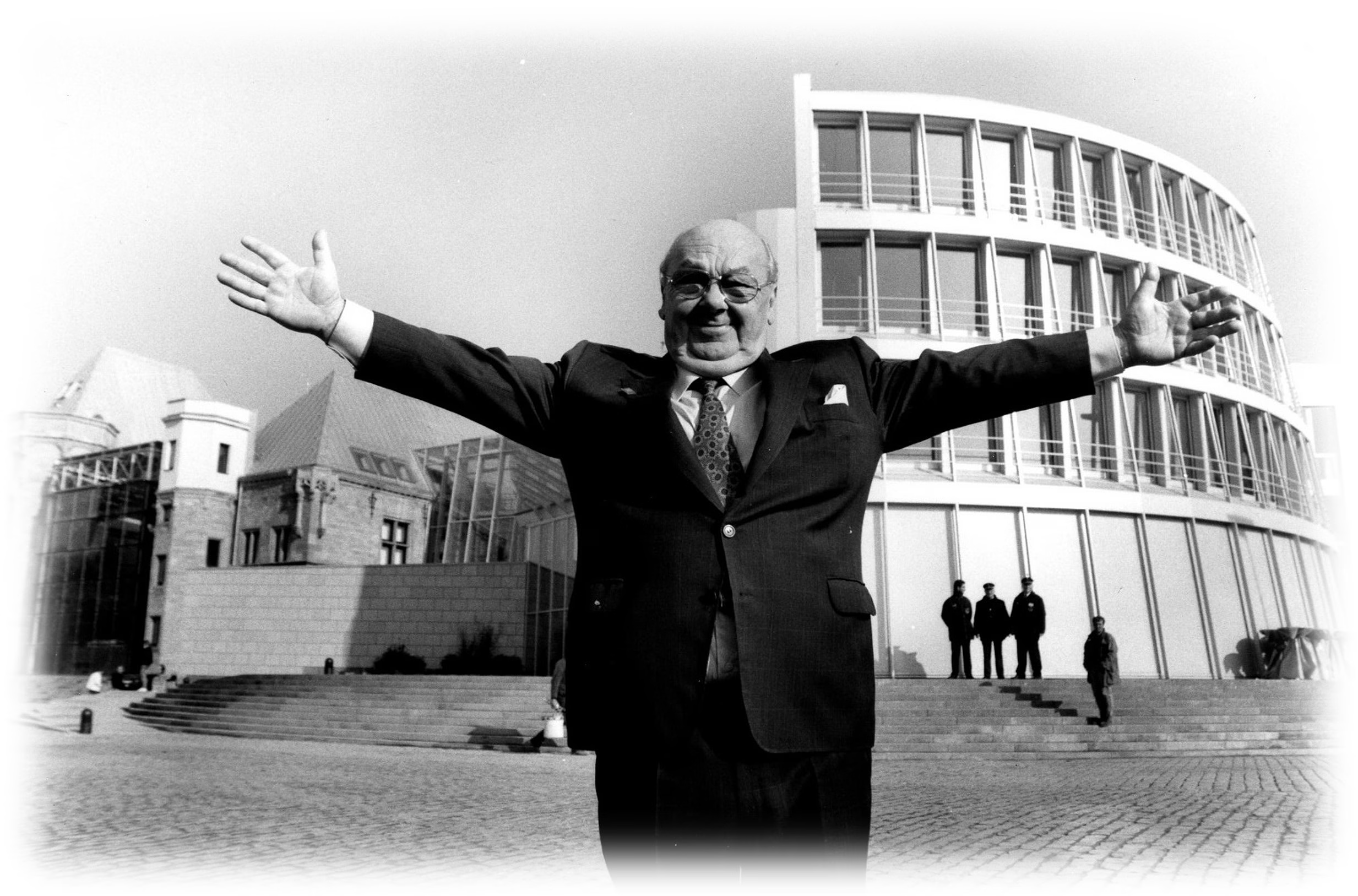
My starting point was completely different. I was born into a family of entrepreneurs; my father, Hans Imhoff, believed in me from an early age and opened up great opportunities for me. I am well aware of how privileged this starting point was. For many years, I led the textile service provider Larosé, which employed nearly 1,000 people, and after its sale in 2016, I returned to the Chocolate Museum. This makes me all the more impressed by how Maria Clementine Martin built a business from her knowledge under completely different circumstances. As an entrepreneur, I was particularly interested while reading in how she approached her product. Lemon balm water and monastic healing knowledge were nothing new. Yet Maria Clementine Martin turned them into a distinctive offering: with reliable quality, clear origins, and a promise of help in everyday life. She didn’t simply sell a high-proof herbal mixture. She sold trust.
Of course, that made me think of chocolate. Its production is, in essence, no secret; the special know-how lies in the details, such as the precise control of temperature and the duration of conching. As different as chocolate and lemon balm liqueur may be, the entrepreneurial challenge is similar: knowledge must be transformed into reliable quality—and quality into trust.
Maria Clementine Martin did not leave this trust to chance. She kept the monastery’s name in the company’s title, obtained permission to use the Prussian coat of arms as a seal of quality, registered her brand early on, and expanded beyond Cologne with retail locations in Bonn, Aachen, and Berlin. And she was a fighter. Whenever imitators tried to capitalize on her success, she stood her ground. She knew that a good idea alone isn’t enough. You have to stand up for its quality, have staying power—and talk about it.
Here I recognize a sentiment that resonates with me personally: “Making the good even better.” At the Chocolate Museum, we deal with a product that almost everyone knows and associates with memories. That is precisely why we cannot rest on its popularity. We must continually retell its story, keep developing our museum, and give our visitors good reasons to come back. Tradition only stays alive if it doesn’t become a crutch.
However, lasting achievements never come about on their own. My career would not have been possible if my husband and I hadn’t shared responsibility for our children; later, we ran Larosé and the Chocolate Museum together. Maria Clementine Martin, too, knew whom she could trust with responsibility. She bequeathed her business to her young assistant, Peter Gustav Schaeben, who carried on the enterprise. To me, this represents yet another wise decision: Anyone who wants to create something that outlasts their own lifetime needs people who complement them, challenge them, and take on responsibility.
The story of Maria Clementine Martin remains inspiring to this day. She did not challenge the social order of her time with grand words, but through her actions. She did not wait for someone to grant her equality. She made it happen. We must not forget just how extraordinary her success was under the conditions of that era. Role models alone do not break through glass ceilings. But they expand our conception of what is possible. This makes it all the more important to bring this woman out from the shadow of her own legacy.
Both stories also have implications that go beyond immediate business success. The Chocolate Museum generates its own revenue and pays rent to the nonprofit Imhoff Foundation, which owns the property. The foundation uses these funds to support projects in Cologne. The Klosterfrau Group, for its part, is owned by the Wilhelm Doerenkamp Foundation in Switzerland. In both cases, economic success is not merely an end in itself—and I like that.
Petra Pluwatsch and Martin Oehlen tell this story in a vivid and historically accurate way. More than 150 illustrations, many of them previously unpublished, make this volume a work of economic and urban history, a chapter on medicine and emancipation—and an exceptionally beautiful book about a world-famous brand whose founder had been all but forgotten.
This book is not a business guide, and yet it reveals a great deal about what entrepreneurship can be in the best sense of the word: looking closely, recognizing an opportunity, standing up for quality, weathering resistance, and taking on responsibility beyond one’s own lifetime. Maria Clementine Martin did all of that 200 years ago. I’m so glad I’ve now had the chance to get to know her—as a Cologne-based entrepreneur and as a kindred spirit.
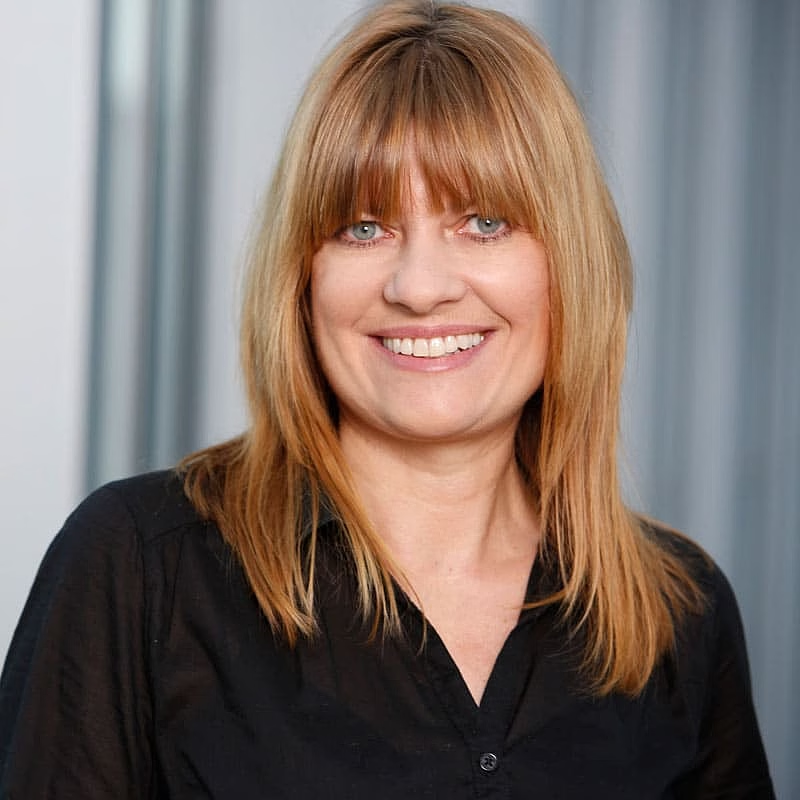
I'm Astrid and I've been working in marketing at the Chocolate Museum for more than 10 years. It's one of the nicest places to work in Cologne and there are always great stories to tell about cocoa and chocolate. Where else can you get such a great view of the Rhine right from your desk?