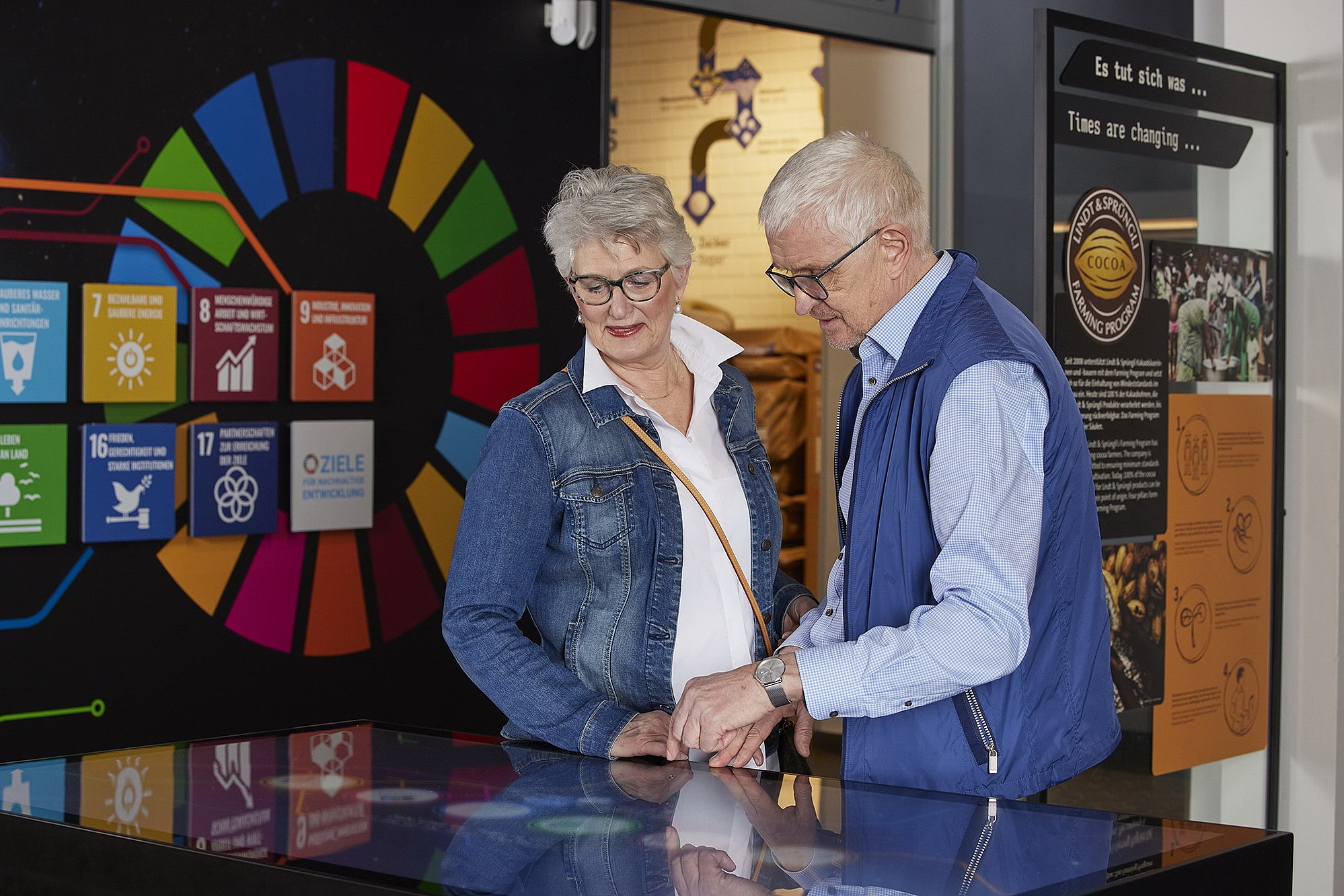
SDGs in our exhibition
Sustainability is a huge topic and often feels abstract. Many people understand that global problems such as hunger exist, but there is a lack of concrete recommendations for action.

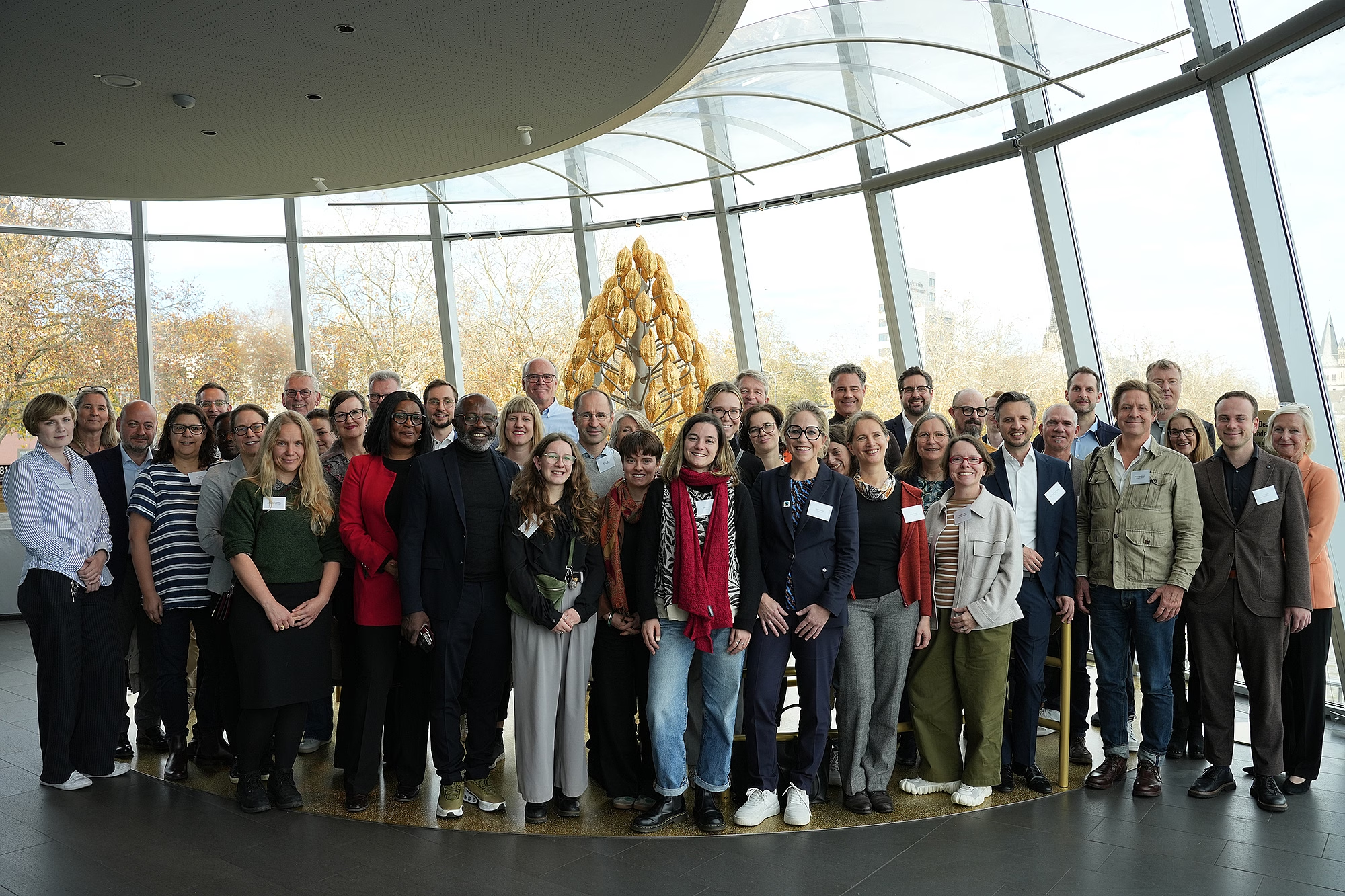
The cocoa market is in turmoil: skyrocketing prices, extreme crop failures, and widespread uncertainty on all sides. But what does this chaos actually mean for the people at the very beginning of the supply chain? And what does reality look like beyond the headlines? To hear precisely these global voices and bring apparent opposites to the table, we transformed the Chocolate Museum Cologne into a space for intensive dialogue in November 2025. Here is a look back by Andrea Durry at a conference that is changing the way we view chocolate.
For more than a decade, the global cocoa market was considered relatively stable. Reliable crop forecasts, well-stocked warehouses, and low prices kept the sector calm. But this apparent stability proved to be deceptive.
Following an already weak harvest in 2022/23, the industry was hit in 2023/24 by another massive crop failure in Ghana and Côte d’Ivoire—the world’s two most important producing countries. The consequences were dramatic: global cocoa production fell by around 13%, while prices skyrocketed within a very short time. They doubled, tripled—yes, even quadrupled—and rose to over $12,000 per ton. Adjusted for inflation, the market had not seen such high prices in decades.
This extreme volatility shook the entire sector. It unsettled producers as well as traders, manufacturers, and consumers—and raised a central question for me: What is actually the reality here, and are we perhaps seeing only one side of the coin?
These are precisely the questions we wanted to explore together at the Chocolate Museum in Cologne.
Under the title “Price chaos in the cocoa market – Conflicts of interest, room for change?”, an international cocoa conference took place on November 5, 2025, at the Chocolate Museum in Cologne. In cooperation with the SÜDWIND Institute, we brought together experts, producers, and representatives from academia, civil society, and industry from around the world.
It was particularly important to me to create a space where different perspectives could be heard—and where controversial positions could be openly discussed.
The conference began the evening before, on November 4, with a get-together above the rooftops of Cologne. In a relaxed atmosphere, participants had the opportunity to get to know one another and engage in initial conversations.
Following opening remarks by Dr. Christian Unterberg-Imhoff, the keynote address by Prof. Dr. habil. Lisa Fröhlich set the tone for the conference: She spoke about the urgently needed transformation of global supply chains—a topic that could hardly be more timely given current developments in the cocoa sector.
On November 5, the conference day was dedicated to the central issues of current market developments. Various expert presentations addressed topics such as:
I found the practical reports from companies that have to deal with the challenges of volatile markets on a daily basis particularly valuable. They made it clear just how complex the situation is—and how closely economic, social, and environmental issues are intertwined.
At lunchtime, a guided tour of our exhibition “Cocoa’s Journey Through Time” offered an opportunity to contextualize the topic historically. In the afternoon, the focus then deliberately turned to the future: representatives from various countries shared their visions for a cocoa market in which producers take center stage, sustainable sourcing becomes the norm, and good purchasing practices contribute to greater stability.
The event concluded with a panel discussion featuring Friedel Hütz-Adams, before the day wrapped up with extensive networking.
A key finding of the conference was the shared assessment that the currently high cocoa price (as of November 2025) fundamentally benefits many people in the growing regions. In Central America in particular, producers can build up reserves and stabilize their economic situation thanks to the higher price level. In West Africa, too, the higher revenue per ton is ensuring that many farmers are looking to the future with greater hope.
At the same time, it became clear that the market must stabilize in the long term. Many participants expect and hope that the cocoa price will settle in the medium term at a level of around 4,000 to 5,000 USD per ton—a price range that could provide planning security and benefit producers sustainably.
For me, the conference demonstrated one thing above all: the dialogue on global supply chains requires spaces where diverse voices are heard. This is precisely the kind of space we aim to continue providing through the Chocolate Museum.

My name is Andrea and I'm originally from the Eifel region. At the Chocolate Museum I am responsible for the exhibition, the collection and the archive. I've been working at the Chocolate Museum for almost thirty years now and I still eat chocolate every day. I love it with a cup of coffee. My favorite place in the Chocolate Museum is our cultural history department. I am always amazed at what the historical exhibits can tell us.