Asterix and the Aztecs
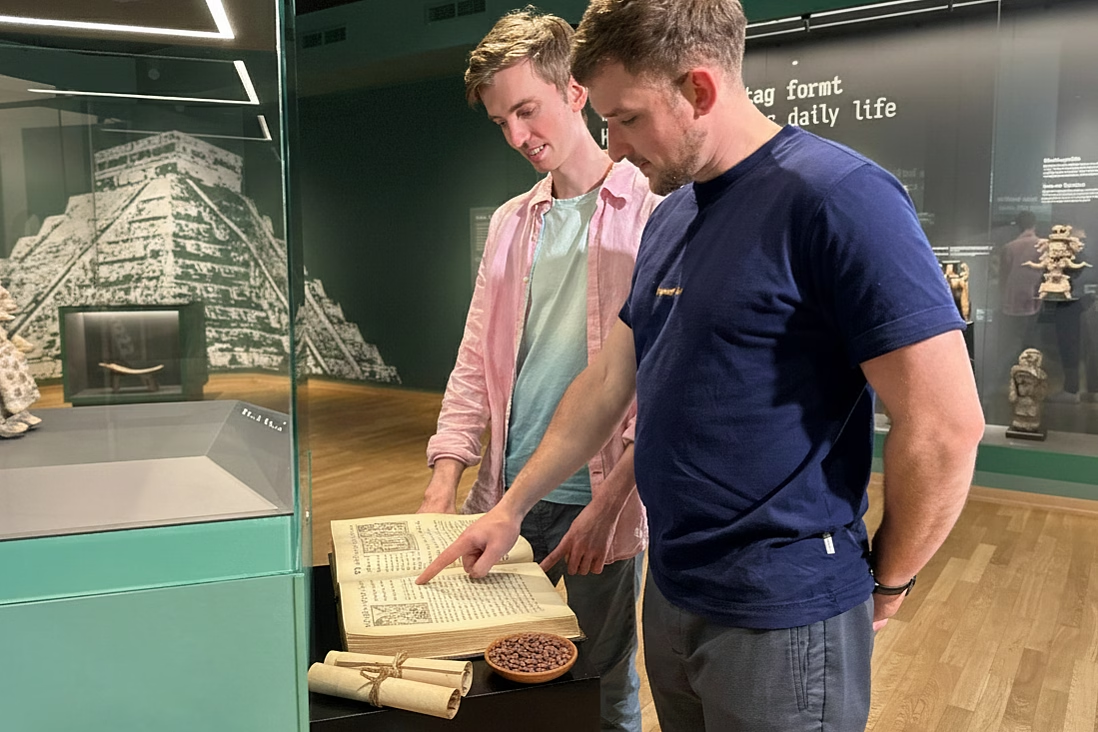
Gluttony, remedy or even deadly ice cream? If you want to know what people used to think about chocolate, you have to delve deep into old writings.

Have you ever wondered when and where the very first cup of hot chocolate was enjoyed? Most of us immediately think of the Maya or the Aztecs—but the story is actually much older and more surprising! Our museum curator, Andrea, takes you on a fascinating journey through time: from millennia-old shards in the rainforests of South America to our exhibits at the Chocolate Museum. Find out how archaeological discoveries in Ecuador have completely turned the history of cacao on its head—and what a very special vessel here at the Chocolate Museum has to do with it.
Enjoy reading and the search for clues!
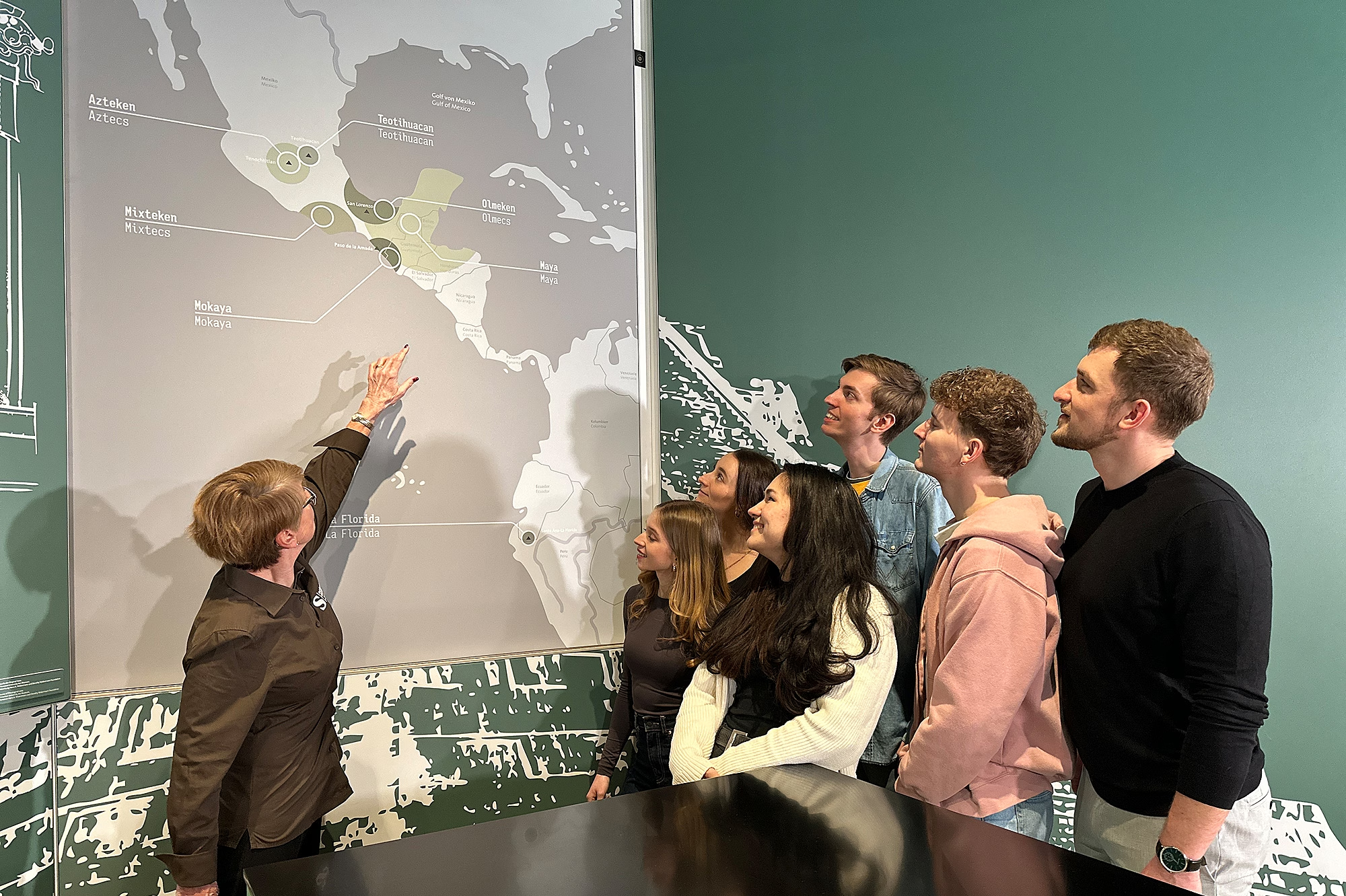
Where does the history of cacao begin? With the Maya and Aztecs? They played a major role in the history of cacao—but the earliest evidence found so far takes us even further back in time and from Central America to South America. In Ecuador, researchers have discovered cocoa residues on pottery dating back thousands of years. The findings show that people were already using cocoa about 5,500 years ago. We’ll take you on a journey to trace the origins of a plant that has been with us ever since.
The cacao tree is believed to have originated in the Amazon lowlands. The earliest ceramic finds containing cacao residues to date come from the Santa Ana-La Florida archaeological site in Ecuador. They are dated to around 3500 to 3300 B.C. For a long time, it was assumed that the earliest use of cacao had taken place in Central America. The finds from Ecuador have changed this view: They provide evidence of use in South America and are more than 1,000 years older than the previously known finds from Central America:
INPC Zonal 7 promotes the recovery of the social memory of cacao – National Institute of Cultural Heritage.
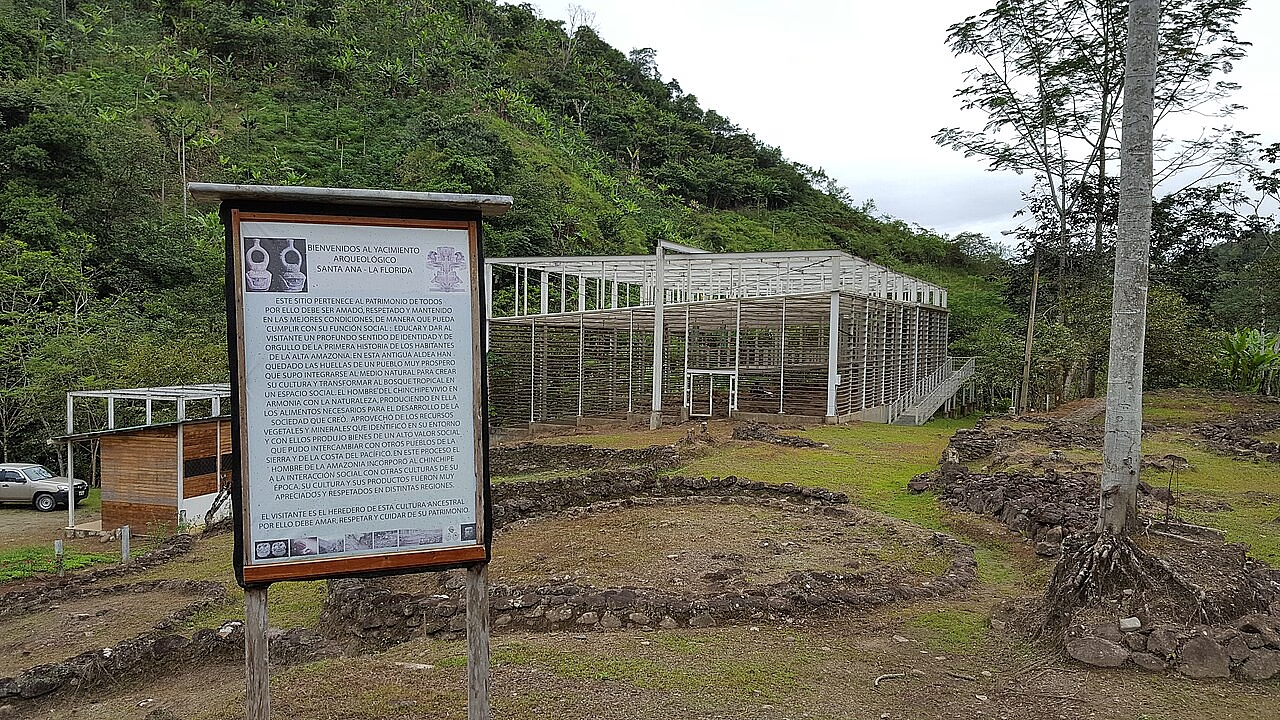
What do the remains of this settlement tell us? In Santa Ana-La Florida, researchers are studying about 20 buildings that once formed a ceremonial center. Cocoa residues were found both on vessels from graves and on shards from refuse pits. The research also shows that the people there used both wild and cultivated varieties of cacao. Cacao served as the basis for religious ceremonies, food, beverages, and medicine—its significance thus extended far beyond any single purpose.
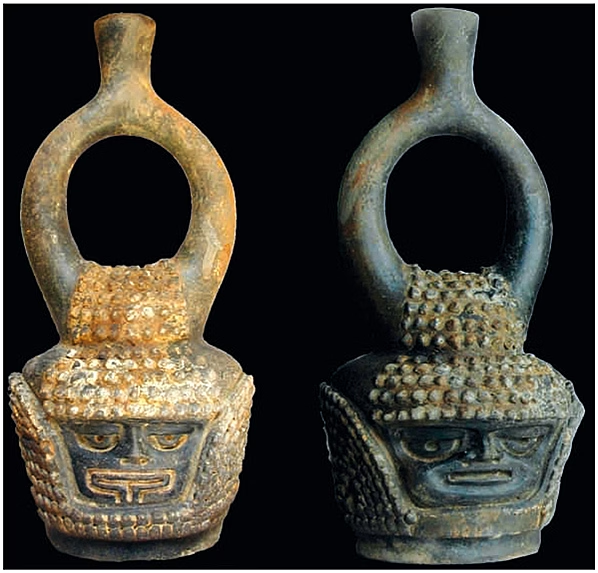
At the Chocolate Museum, you can explore this early history through a tangible object: a replica, made in 2023, of a stirrup-shaped vessel from Santa Ana-La Florida, on loan from the Embassy of Ecuador www.cancilleria.gob.ec/alemania/. The original dates from around 2100 B.C.; traces of cacao were also found in it. It’s important to note the distinction: This vessel is younger than the approximately 5,500-year-old ceramic finds from the same site. Together, however, they illustrate just how far back the use of cacao goes.
How do we know this? An ancient vessel does not reveal at first glance what was once stored or prepared in it. Only by analyzing its residues can we find evidence of cacao. Such traces help us reconstruct the history of its use. Our understanding of this history is constantly evolving: New discoveries can supplement or alter previous assumptions. Santa Ana-La Florida is a striking example of this.
The origins of cocoa use take us back about 5,500 years to South America. From there, cocoa spread to Central America and became significant for many societies. The findings from Ecuador remind us that this history is far from fully understood. So the next time you visit the Chocolate Museum and stand in front of the replica of the stirrup-shaped vessel, it’s worth taking a closer look: This unassuming object tells the story of the early beginnings of a long-standing connection between humans and cacao.
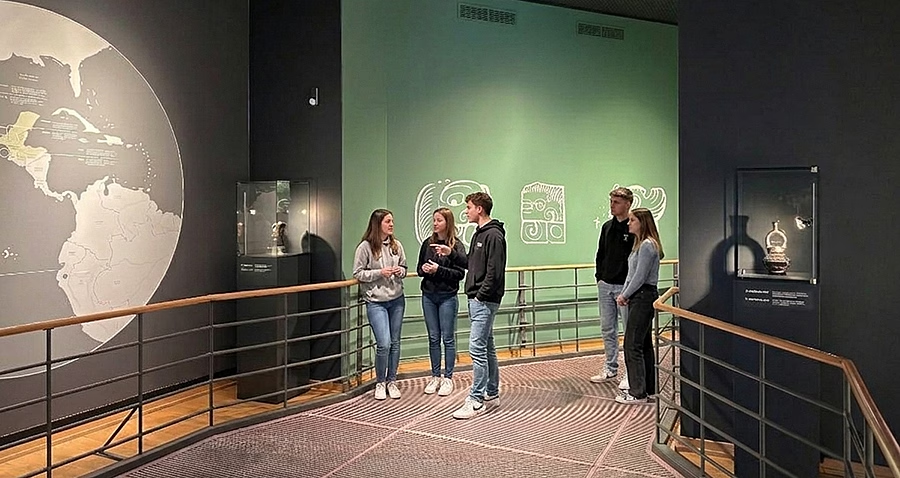
Then why not stop by and check out our exhibition, “A Journey Through the History of Cocoa”! There, you can see the fascinating stirrup-shaped vessel and many other exciting exhibits in person and experience firsthand just how vibrant the millennia-old history of cocoa remains to this day.
My name is Andrea and I'm originally from the Eifel region. At the Chocolate Museum I am responsible for the exhibition, the collection and the archive. I've been working at the Chocolate Museum for almost thirty years now and I still eat chocolate every day. I love it with a cup of coffee. My favorite place in the Chocolate Museum is our cultural history department. I am always amazed at what the historical exhibits can tell us.